Kathmandu — A report titled “Nepal’s Parliamentary Elections” published on March 31, 2026 by the Congressional Research Service (CRS), a research body under the United States Congress, has described Nepal’s recent political changes as a historic turning point. The report considers the election held on Falgun 21 as a decisive turning point, noting that the Rastriya Swatantra Party (RSP) secured a clear majority with 182 seats. It interprets the rise of Balen Shah as Prime Minister as the result of an “anti-establishment uprising.” However, the alliance between Balen and the RSP is described by CRS as a “marriage of convenience.”
According to the report, this transformation was not sudden but a direct result of the youth movement that began in Bhadra 2025. The movement started after the then Prime Minister K.P. Sharma Oli’s government imposed a ban on 26 social media platforms, and it quickly spread nationwide. Protests on September 8–9 turned violent, resulting in at least 75 deaths, more than 2,000 injuries, and economic losses worth around NPR 85 billion, as stated in the report. The movement not only led to the سقوط of the Oli government but also brought deep public dissatisfaction and distrust toward traditional politics to the surface.
Under pressure from the movement, K.P. Sharma Oli was forced to resign on September 9, 2025. Amid the resulting power vacuum, Balen Shah refused to become interim Prime Minister. Subsequently, through an online voting process led by youths, former Chief Justice Sushila Karki was selected, and she became Nepal’s first female Prime Minister on September 12.
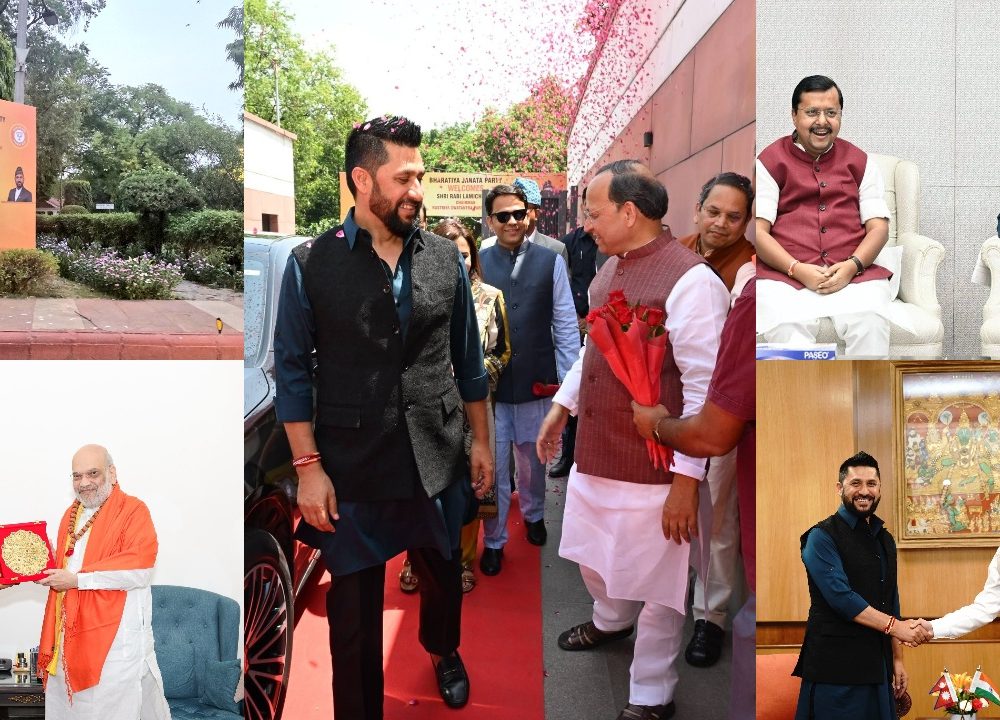
The CRS describes the relationship between Balen Shah and Rabi Lamichhane as “friendly but convenience-driven.” It concludes that the collaboration between Balen, who carries an independent image, and Rabi Lamichhane, the leader of the organized RSP, is based more on electoral strategy than deep ideological unity. The report also portrays the RSP as an “umbrella organization” that has unified citizens dissatisfied with traditional parties around the agenda of good governance.
The report provides a mixed assessment of Balen Shah’s leadership style. It notes his reliance on social media, particularly Facebook, over traditional media, a lack of clear governance plans, and a tension between his “populist image” and “administrative complexity.” His performance as Mayor of Kathmandu Metropolitan City is also evaluated as mixed.
The report further comments on Nepal’s foreign policy, suggesting that under Balen Shah’s leadership, it is likely to be “pragmatic and centered on national interest.” It also highlights that Nepal currently lies at the center of strategic competition between China and the United States, emphasizing the importance of stability and diplomatic balance in the coming days.
The Congressional Research Service (CRS) is a nonpartisan research institution of the US Congress, established in 1914 and operating under the Library of Congress. It provides factual and nonpartisan analysis to US lawmakers on various countries and issues. Overall, the CRS report presents Nepal’s emerging political wave not just as an internal transformation but as a significant development linked to international interest and global power competition.