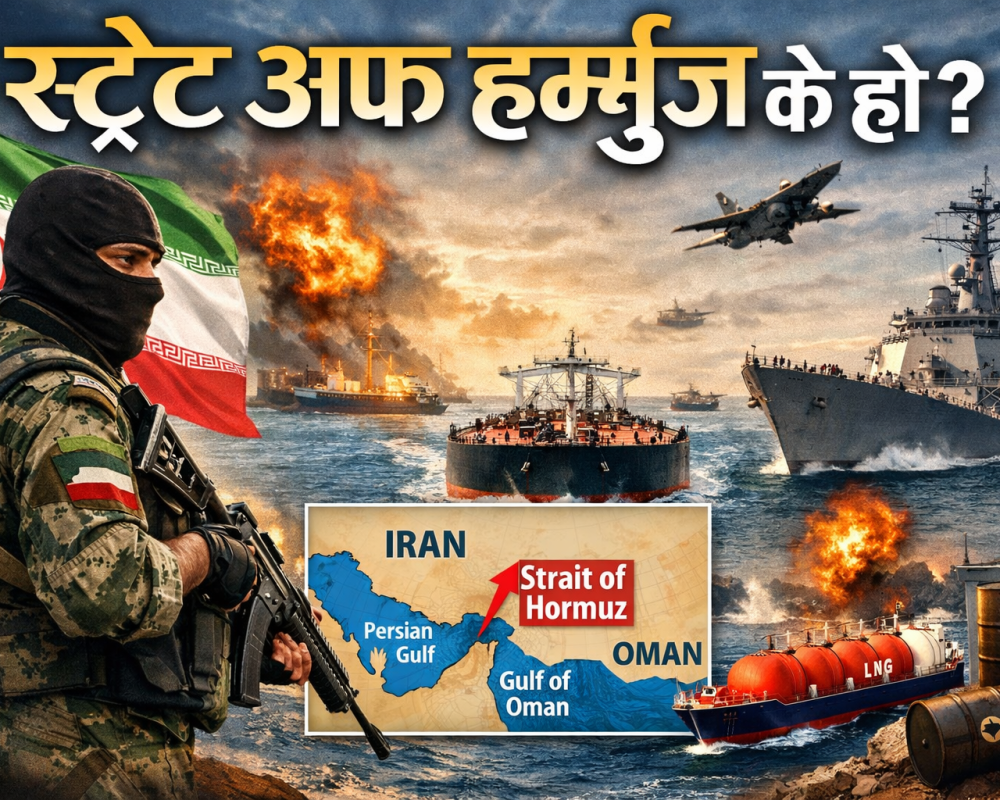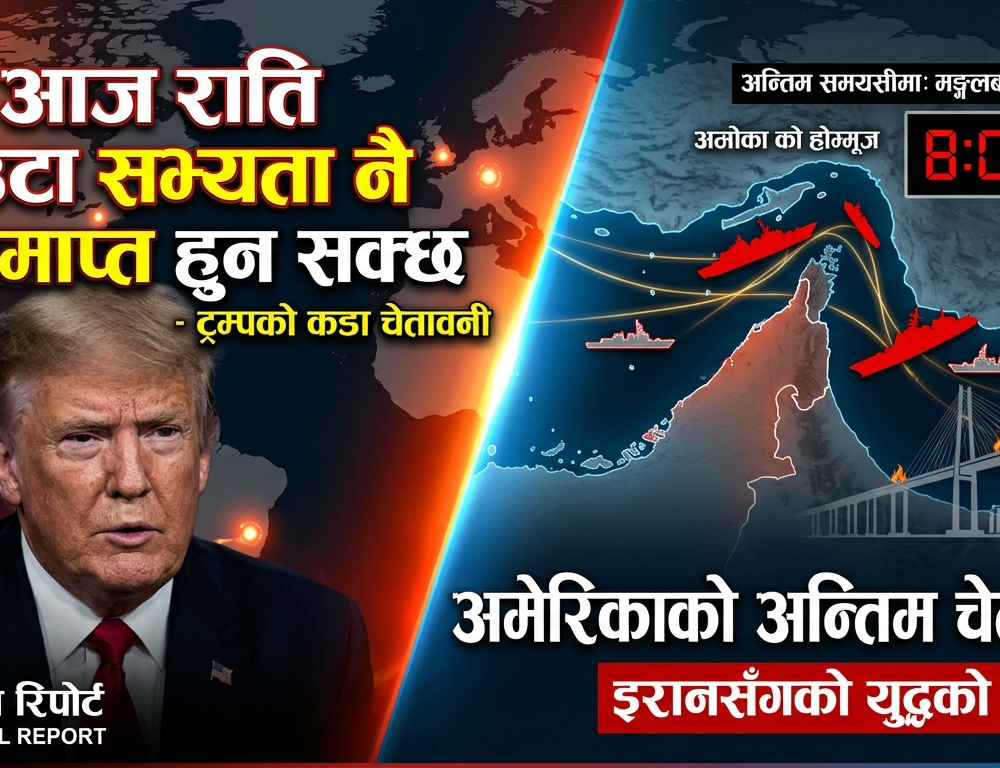
Prakash Kafle / Kathmandu. Strait of Hormuz is considered one of the most sensitive and strategically important maritime routes in the world. This narrow waterway connects the Persian Gulf to the Arabian Sea via the Gulf of Oman and ultimately to the open ocean. To the north lies Iran, while to the south is Oman (particularly the Musandam Peninsula).
Although it is about 33 kilometers wide, the actual navigable route for large oil tankers is much narrower. The lanes designated for shipping are limited to just a few kilometers, making it even more risky.
Despite appearing small, the importance of this waterway is immense. A significant portion of crude oil exported from major Middle Eastern oil-producing nations—such as Saudi Arabia, Iraq, Kuwait, and the United Arab Emirates—passes through this route to reach global markets. It is estimated that nearly 20 percent of the world’s daily oil supply travels through this channel.
Similarly, a large portion of liquefied natural gas (LNG) exported from Qatar also depends on this route. Therefore, if this waterway is blocked, oil and gas supply would be disrupted, global prices would spike, inflation could rise, and economic instability could occur.
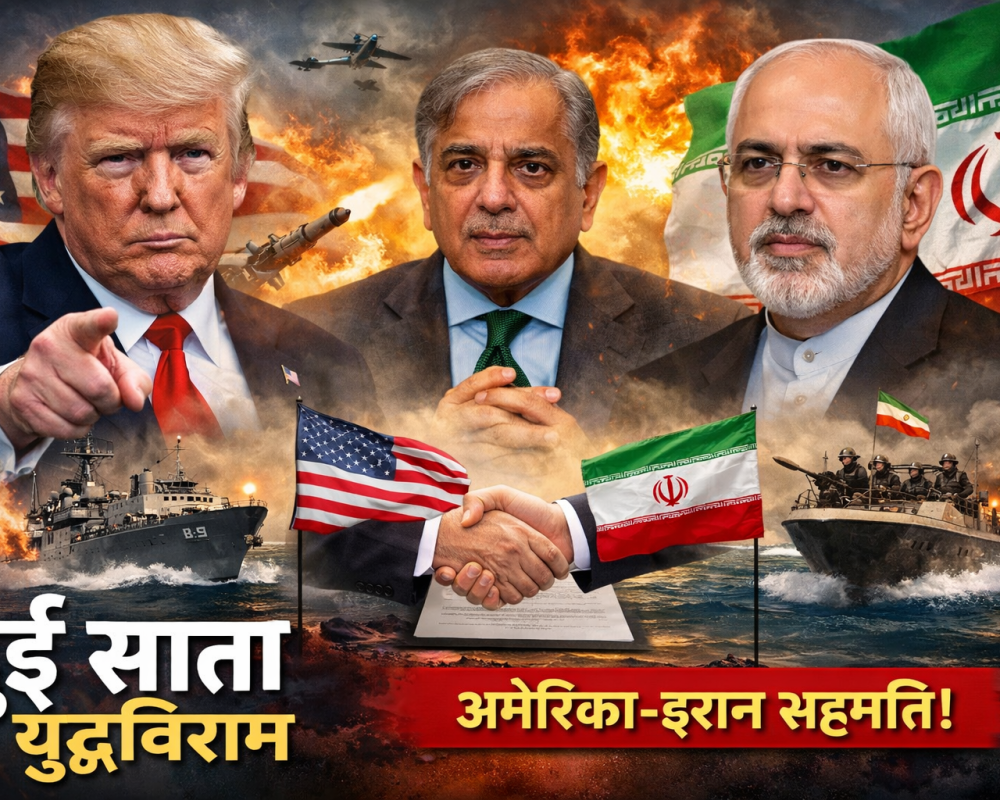
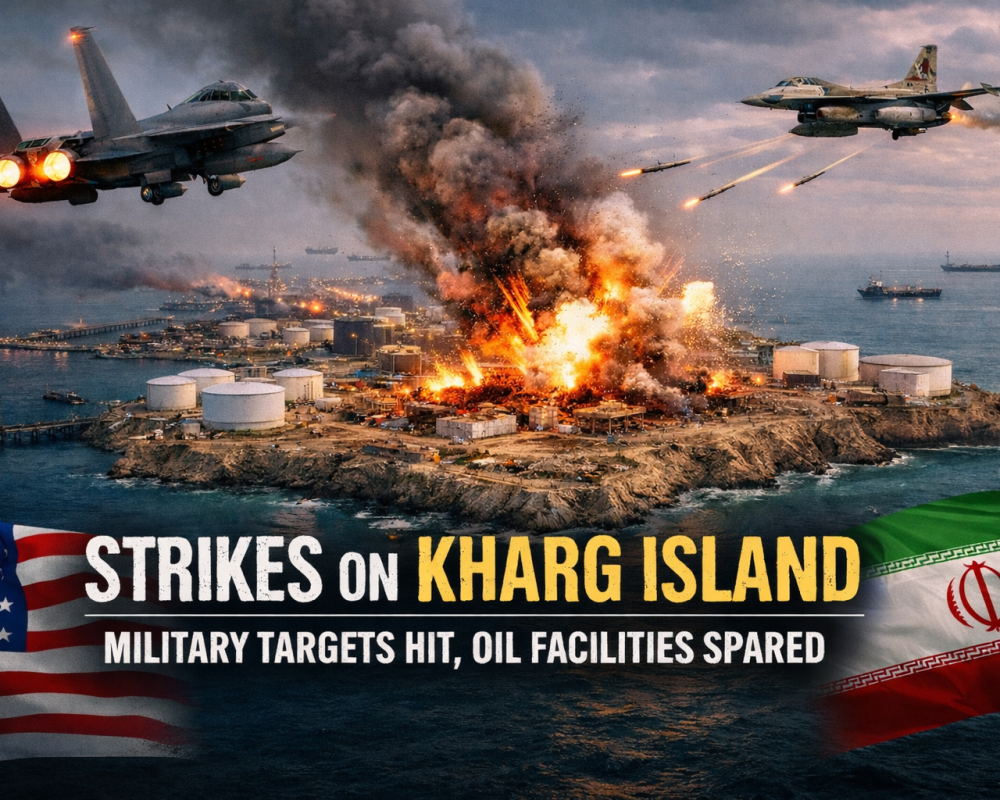
Due to its geographic location and dependence on energy supply, the region has always been a center of geopolitical tension. Conflicts between Iran and the United States, along with the military presence of other powerful nations, occasionally create tension and confrontations here. In some cases, Iran has threatened to close the strait as a form of pressure, while the U.S. and its allies insist that maritime navigation must remain free.
International naval cooperation is undertaken to maintain security in this region. Nevertheless, its sensitivity remains high. Even a minor incident—such as an attack on an oil tanker, laying explosives at sea, or small-scale military clashes—can trigger a major crisis and destabilize global energy markets.
In conclusion, the Strait of Hormuz is not just a maritime passage; it is a crucial “lifeline” for the global economy. The energy supply passing through here keeps the world economic cycle moving. Therefore, any tension or disruption in this area will inevitably have worldwide repercussions.