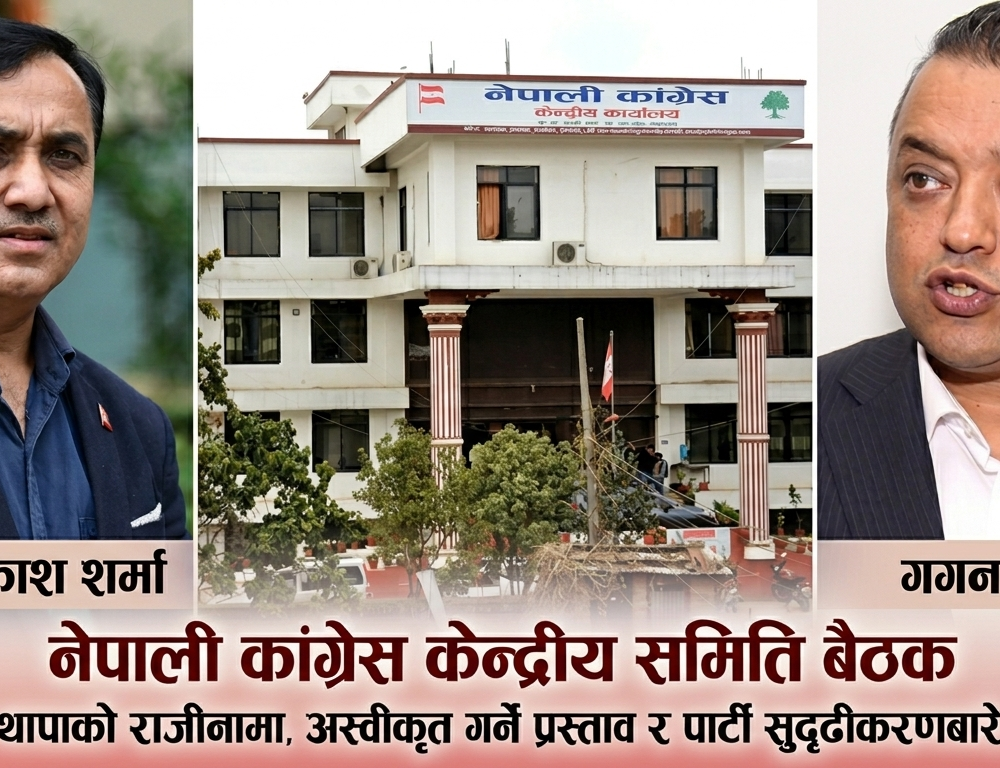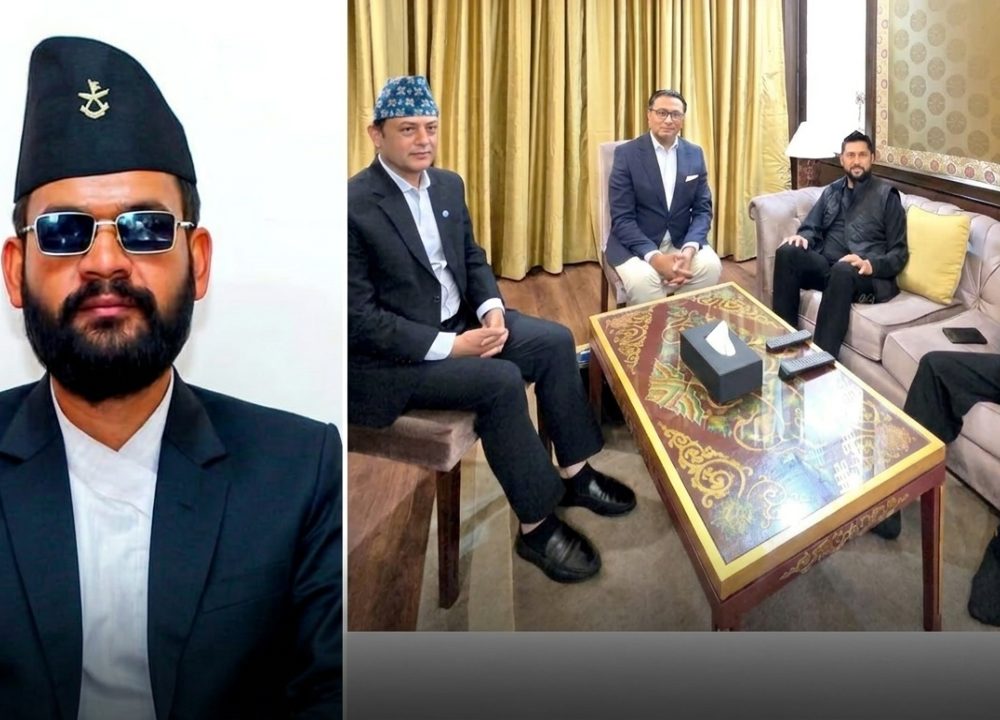
Prakash Kafle/Kathmandu . Nepali Congress (NC) President Gagan Thapa formally tendered his resignation on Wednesday, March 18, taking full moral responsibility for the party’s historic debacle in the recently concluded general elections. Thapa, who led the party as its Prime Ministerial candidate, faced a personal defeat in Sarlahi-4, losing to Rastriya Swatantra Party (RSP) candidate Dr. Amaresh Kumar Singh by a margin of 12,857 votes. Having been elected president through a Special General Convention in January, Thapa submitted his resignation to Vice-President Bishwa Prakash Sharma, citing the need to pave the way for a fresh leadership transition following the poor electoral results.
In the March 5 parliamentary elections, the Nepali Congress secured only 38 seats—18 under the first-past-the-post (FPTP) system and 20 under proportional representation—marking its worst-ever performance. Despite the setback, the party establishment is reportedly reluctant to accept Thapa’s departure. A crucial Central Working Committee (CWC) meeting is scheduled for today, Friday, where the resignation will be formally discussed. Senior leaders, including Vice-President Sharma, argue that the electoral loss is a collective failure rather than an individual one, and they are prepared to table a proposal to reject the resignation to maintain party unity during this period of crisis.
The CWC meeting is expected to conduct a comprehensive review of the party’s organizational weaknesses and discuss the timeline for the 15th General Convention. Thapa’s resignation comes amid a backdrop of intense internal friction, including a legal challenge from the faction loyal to former president Sher Bahadur Deuba regarding the legitimacy of the special convention. As the party stands at a critical crossroads, the outcome of today’s meeting will be instrumental in determining the future trajectory of the country’s oldest political institution.