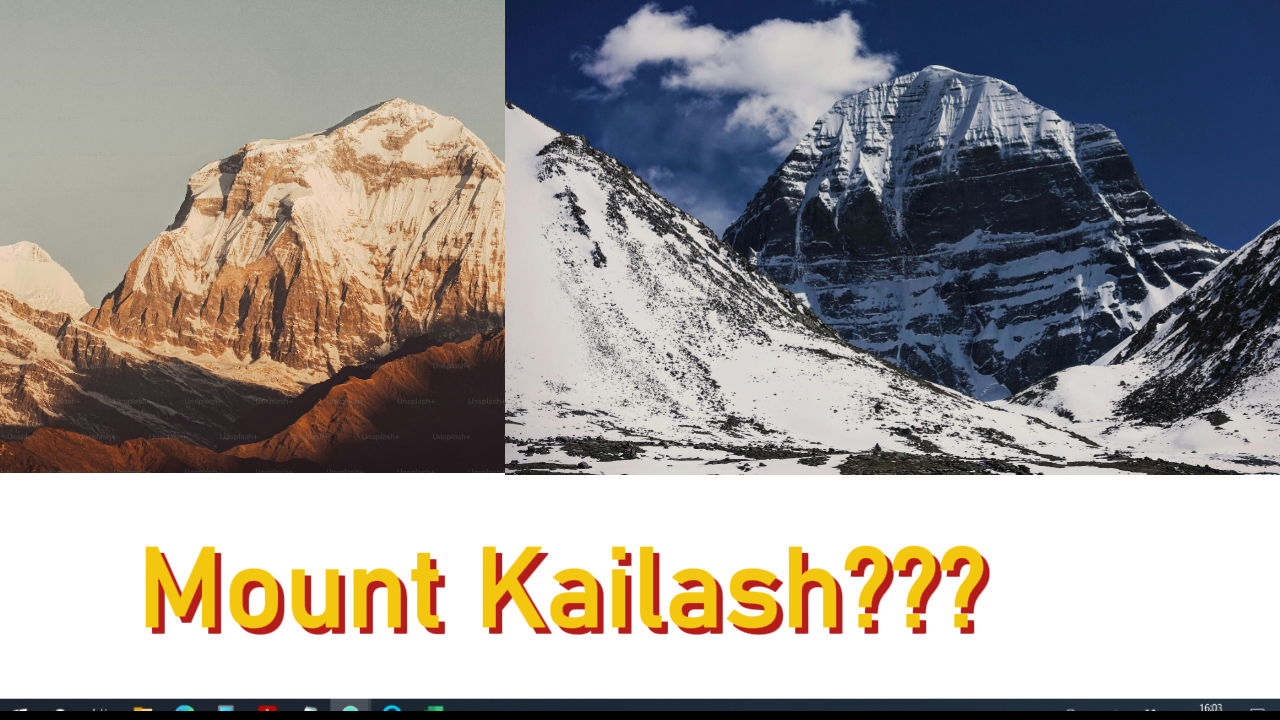
Prakash Kafle/Kathmandu. Although it stands at 6,638 meters — significantly lower than Mount Everest — Mount Kailash remains one of the few major Himalayan peaks that has never been climbed. Contrary to circulating rumors, experts confirm that atmospheric pressure is not the reason behind the mountain’s untouched summit. Why the mountaineers don’t climb the Mount Kailash??
Sacred Status Drives Protection
The primary reason for the climbing ban is religious reverence. Mount Kailash is considered sacred in Hinduism, Buddhism, Jainism, and the Bon tradition. Many Hindus believe it to be the abode of Lord Shiva, while Tibetan Buddhists regard it as a spiritual center of cosmic significance.
Because of this, the Chinese government does not issue climbing permits for the peak. Officials have maintained the restriction to preserve its religious sanctity and avoid international controversy.
Mountaineers Show Restraint
Several prominent climbers over the years have reportedly declined opportunities to attempt the summit out of respect for its spiritual importance. Unlike Everest, which operates under a regulated climbing permit system, Kailash remains off-limits.
Pilgrimage Continues
While climbing is banned, thousands of pilgrims undertake the Kailash Mansarovar Yatra each year, performing a 52-kilometer circumambulation around the mountain rather than ascending it.
Not an Oxygen or Pressure Issue
At 6,638 meters, Mount Kailash has low oxygen levels similar to many other Himalayan peaks that are regularly climbed. High-altitude specialists state that while the air pressure is reduced and conditions are harsh, the mountain is technically climbable with proper acclimatization.
“From a purely physiological standpoint, Kailash is not beyond human capability,” high-altitude researchers note. Everest, at 8,848 meters, presents far more extreme atmospheric challenges yet sees hundreds of climbers each year.
There is no scientific evidence of unusual atmospheric pressure, magnetic fields, or other natural anomalies preventing ascent.
Conclusion
Despite myths suggesting atmospheric pressure or mysterious forces prevent climbers from reaching the summit, experts confirm the reality is far simpler: Mount Kailash remains unclimbed due to religious reverence, ethical considerations, and official government prohibition — not because of scientific impossibility.