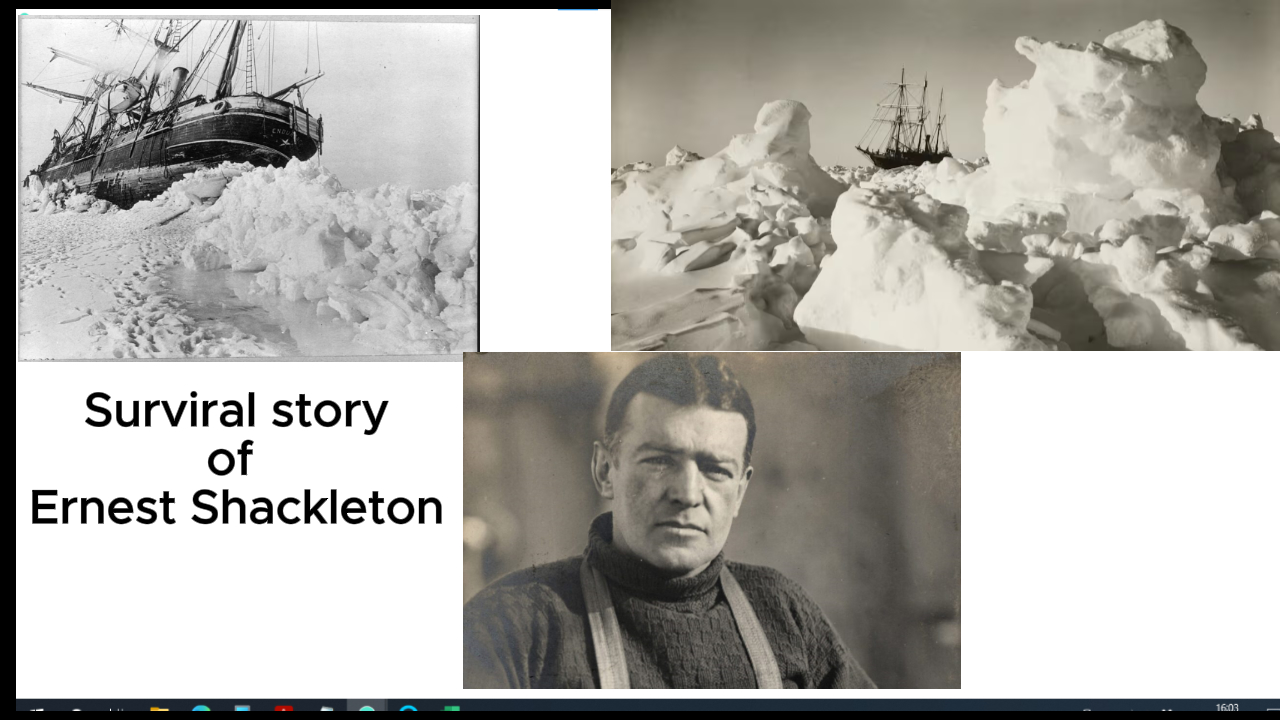
Prakash Kafle/Kathmandu. One of the most extraordinary survival stories in modern history began in 1914, when British explorer Ernest Shackleton set out on the Imperial Trans-Antarctic Expedition. His ambitious goal was to become the first person to cross Antarctica from one side to the other via the South Pole. Shackleton and his crew of 27 men sailed aboard their sturdy ship, the Endurance, filled with hope and determination. However, their dream of exploration soon turned into a dramatic battle for survival in one of the harshest environments on Earth.
In January 1915, disaster struck when the Endurance became trapped in thick sea ice in the Weddell Sea. For months, the crew watched helplessly as shifting ice slowly crushed their ship. By November, the relentless pressure finally destroyed the vessel, forcing the men to abandon it and camp on drifting ice floes. Stranded in freezing temperatures with limited supplies, they faced hunger, extreme cold, and isolation. To survive, they hunted seals and penguins while enduring months of uncertainty on unstable sheets of ice.
As the ice beneath them began to crack and break apart, Shackleton realized they had to move or risk being lost at sea. Using three small lifeboats salvaged from the wreck, the crew launched into treacherous waters and eventually reached the remote and uninhabited Elephant Island. Although they were finally on land, the island lay far from regular shipping routes, making rescue unlikely unless they sought help themselves.
In a bold and risky decision, Shackleton chose five men to join him on a daring rescue mission. They sailed nearly 800 miles across the stormy Southern Ocean in a small lifeboat called the James Caird, battling massive waves, freezing spray, and exhaustion. After 16 perilous days, they reached South Georgia Island — but landed on the wrong side. Shackleton and two companions then made a grueling 36-hour journey across unmapped mountains and glaciers to reach a whaling station and arrange rescue.
After several failed attempts due to heavy sea ice, Shackleton finally returned to Elephant Island in August 1916. In an astonishing outcome, every single crew member survived. Though the expedition failed in its original mission to cross Antarctica, it became legendary for something far greater: the power of leadership, resilience, and unwavering hope in the face of overwhelming danger. Shackleton’s Antarctic ordeal remains a timeless example of human courage and survival against impossible odds.