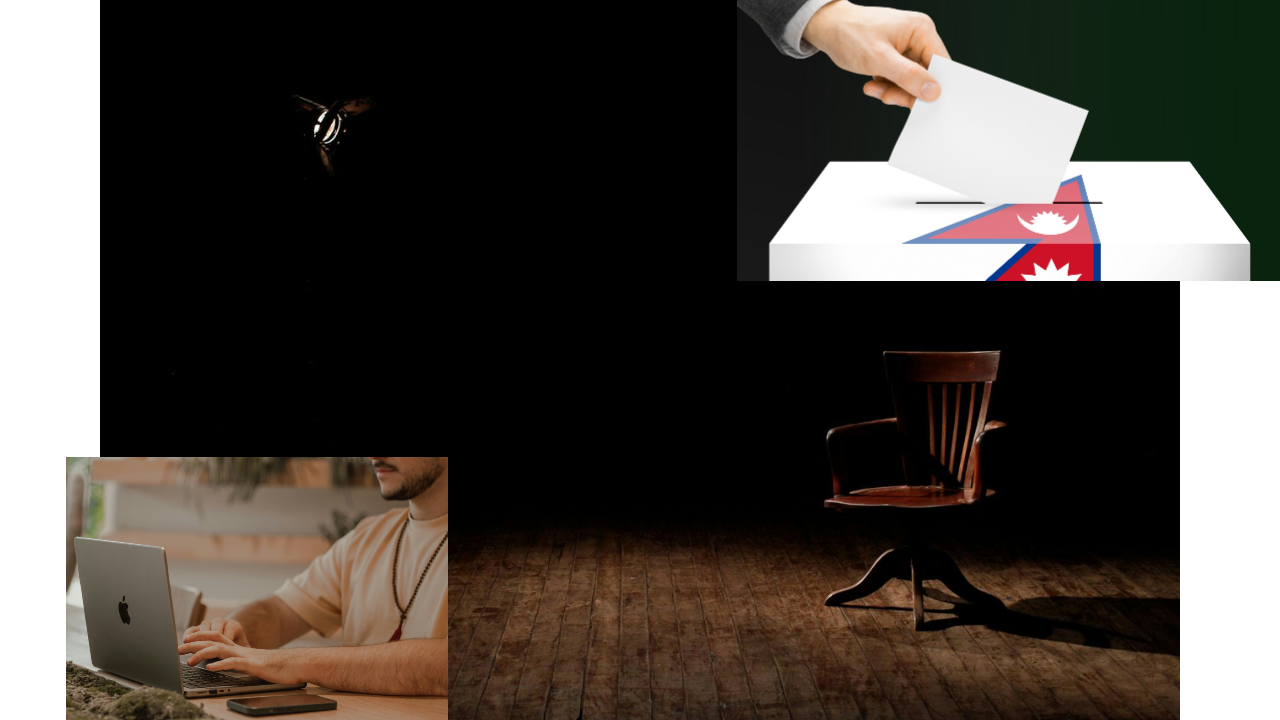
Prakash Kafle/Kathmandu. Dark PR (Dark Public Relations) refers to covert, deceptive, and often unethical communication tactics used to secretly influence public opinion—without revealing who is actually behind the
message.
Unlike traditional PR, which openly represents a person or organization, Dark PR operates in the shadows. The goal is usually political manipulation, reputation sabotage, or narrative control. When people say it’s a “hidden weapon” in elections, they mean it can quietly shape voter perception without voters realizing they’re being influenced.
How Dark PR Works in Elections
Here are the main tactics commonly used worldwide:
1. Fake News & Disinformation:
i)Fabricated stories about opponents
ii) Edited or misleading videos
iii)Anonymous blogs or “news” pages spreading rumors
2. Coordinated Social Media Manipulation
i) Troll farms and bot accounts
ii) Fake grassroots movements (“astroturfing”)
iii) Viral hashtag campaigns created artificially
3. Microtargeted Political Ads
i) Personalized ads based on voter data
ii) Fear-based messaging sent only to specific groups
iii) Messages that disappear after being seen
A well-known global example of data-driven political targeting was the Cambridge Analytica scandal, which raised concerns about how personal data was used to influence elections.
Dark PR in Nepal’s Context
Nepal has experienced rapid growth in social media use, especially Facebook, TikTok, and
YouTube. This creates opportunities for:
i) Anonymous political pages attacking rivals
ii) Coordinated meme campaigns
iii) Leaked audio/video clips during election season
iv) Sudden viral scandals close to voting day
Nepal’s multiparty competition—featuring groups like:
1. Nepali Congress
2.Communist Party of Nepal (UML)
3. Nepali Communist Party
4. Rastrya Sawtantra Party (RSP)
5.Rastrya Parjantra Party
—has made digital narrative battles more intense in recent election cycles.
However, proving organized “Dark PR operations” is difficult because:
i) Campaigns are often unofficial
ii)Funding sources are hidden
iii) Content spreads quickly before fact-checkers respond
Why It’s Dangerous
Dark PR can:
i) Manipulate undecided voters
ii)Suppress voter turnout through fear or confusion
iii) Damage trust in democratic institutions
iv) Create long-term political polarization
Because it operates invisibly, voters may believe they are forming independent opinions—while
actually reacting to engineered narratives.
How to Spot Dark PR
Here are warning signs:
Anonymous pages with extreme claims
Emotional, outrage-driven content
No credible sources
Content that appears suddenly and spreads unusually fast
“Leaked” materials right before voting day
Bottom Line
“Dark PR” isn’t a specific organization—it’s a strategy of hidden influence. In Nepal (and globally), the real challenge isn’t just misinformation—it’s coordinated, concealed influence operations that blur the line between persuasion and manipulation.
Dark PR: The Hidden Weapon Manipulating Nepal’s Elections:
“Dark PR” (dark public relations) refers to covert and deceptive communication tactics used to influence public opinion without revealing who is behind the message. Unlike traditional political campaigning, Dark PR operates anonymously—often through fake accounts, misleading content, and targeted digital ads. In Nepal, the rapid growth of social media has made elections more vulnerable to such tactics. Anonymous Facebook pages, coordinated meme campaigns, edited video clips, and last-minute “leaks” frequently surface during campaign periods. These efforts can quietly shape voter perceptions while avoiding direct accountability.
Major parties such as Nepali Congress, Communist Party of Nepal (UML), Nepali Communist Party, Rastrya Sawtantra Party (RSP),Rastrya Parjantra Party operate in an increasingly competitive digital landscape, where online narratives can shift rapidly. While direct evidence of organized Dark PR campaigns is often difficult to prove, digital
misinformation and coordinated attacks have become a recurring concern. Globally, controversies like the Cambridge Analytica scandal have shown how voter data and targeted messaging can be used to influence democratic processes. Experts warn that Dark PR can manipulate undecided voters, suppress turnout, and weaken trust in institutions. As Nepal’s elections become more digital, the challenge for regulators and voters
alike is distinguishing genuine political debate from hidden influence operations.

