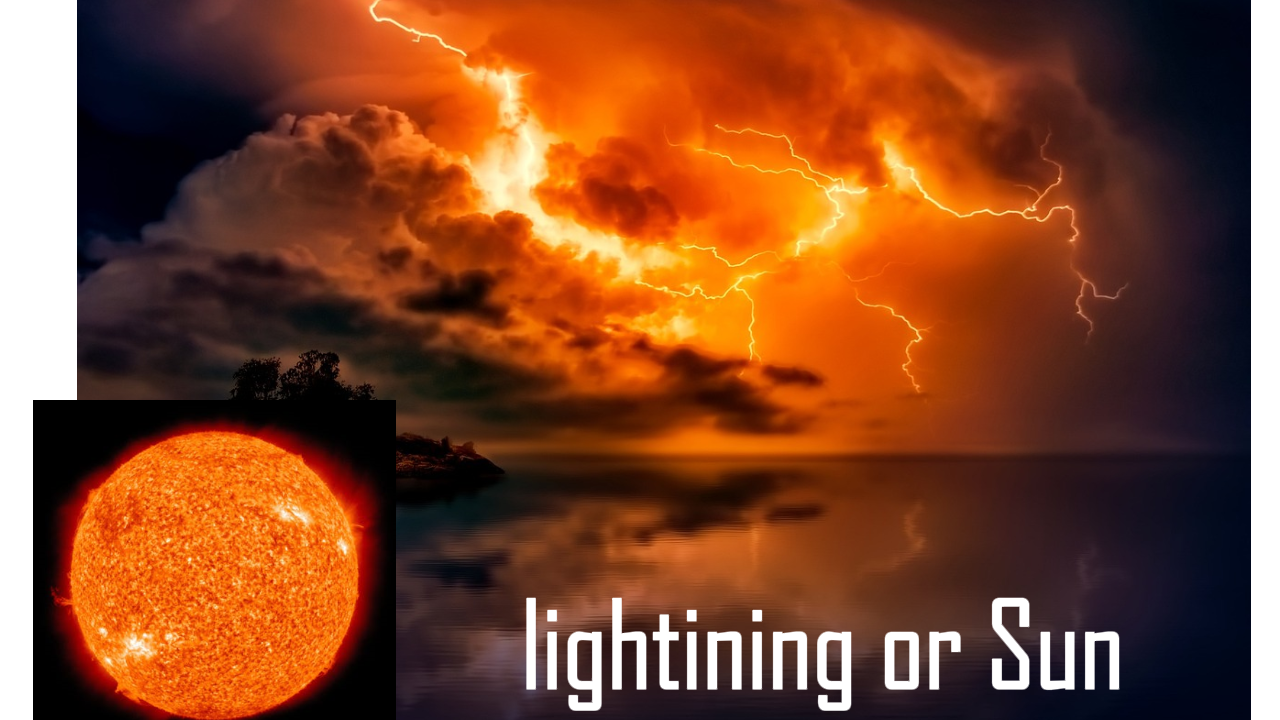
Prakash Kafle/Kathmandu. Scientists have confirmed that lightning is significantly hotter than the surface of the Sun, making it one of the hottest natural phenomena on Earth.
According to research shared by NASA, a single lightning bolt can heat the surrounding air to nearly 30,000 degrees Celsius, which is about five times hotter than the Sun’s surface temperature of approximately 5,500 degrees Celsius.
Experts explain that lightning occurs when electrical charges build up inside storm clouds. When the difference in charge becomes too strong, a rapid discharge of electricity takes place between clouds or between a cloud and the ground. This sudden release of energy superheats the air, turning it into plasma — an extremely hot, electrically charged gas. The intense heat causes the bright flash seen during storms and produces thunder due to the rapid expansion of heated air.
Scientists are also studying powerful “superbolts,” which are unusually strong lightning strikes often recorded over oceans. Some studies suggest that lightning activity may increase as global temperatures rise, although further research is ongoing.
Researchers say understanding lightning is important not only for weather forecasting but also for improving public safety during severe storms.
Lightning remains a powerful reminder that nature can generate temperatures even hotter than our nearest star.

